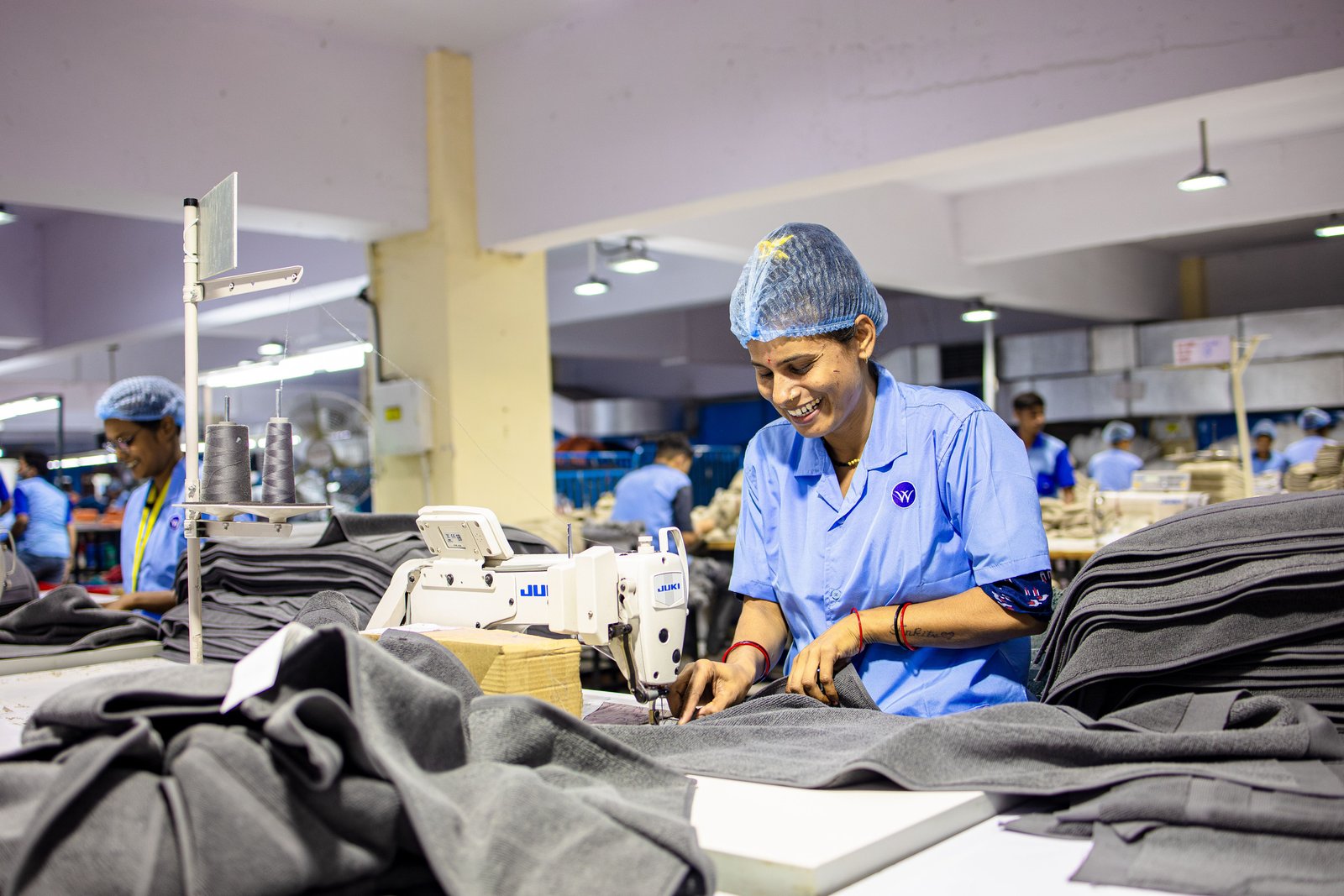
Choosing a uniform manufacturer is not simply a matter of comparing prices or selecting a fabric sample. For schools, corporates, hospitality businesses, and other institutions, the right uniform program depends on specification accuracy, textile quality, consistent fit, production capability, customization, and dependable execution at scale.
Why Uniform Procurement Requires More Than a Price Comparison
Institutional uniforms are typically purchased in quantities where even a small quality or specification issue can become a significant operational problem. Differences in fabric weight, colour, sizing, stitching, shrinkage, or finishing may become visible only after bulk production begins.
A professional procurement process should therefore evaluate the complete manufacturing capability of a supplier rather than focusing exclusively on the quoted price. The objective is to establish a uniform program that remains consistent across batches, locations, employee groups, or academic sessions.
A reliable uniform supplier is not simply a source of garments; it is a partner responsible for translating specifications into consistent products at scale.
Start With Clear Product Specifications
Before approaching manufacturers, organizations should define the uniform requirements as precisely as possible. This includes garment type, fabric composition, colour, GSM, construction details, measurements, trims, branding requirements, and packaging standards.
- Fabric composition and required GSM
- Approved colours and colour references
- Garment measurements and size grading
- Collar, cuff, pocket, button, zipper, and stitching specifications
- Logo placement, embroidery, printing, or other customization
- Packaging and labelling requirements
- Expected order quantity and delivery schedule
Clear specifications reduce ambiguity during sampling and production. They also make supplier comparisons more meaningful because manufacturers are being evaluated against the same requirements.
Evaluate Fabric for the Actual Use Case
Fabric selection should reflect how and where the uniform will be used. A school uniform may require comfort, easy maintenance, colour retention, and durability through repeated washing. Corporate apparel may place greater emphasis on professional appearance, comfort during long working hours, and consistent presentation.
Procurement teams should assess factors such as fibre composition, GSM, breathability, shrinkage, colourfastness, surface appearance, pilling resistance, and maintenance requirements. A fabric that looks attractive in a sample may not necessarily perform well after months of regular use.
For this reason, testing and sample evaluation should happen before bulk approval, particularly when the uniform is intended for long-term institutional use.
Check Fit and Size Consistency
Uniform quality is also strongly influenced by fit. An otherwise well-manufactured garment can create dissatisfaction if measurements vary between sizes or production batches.
Organizations should review physical samples across multiple sizes rather than approving a single sample. Size grading, garment measurements, ease, sleeve length, trouser length, and overall proportions should be checked against an agreed measurement chart.
For recurring uniform programs, maintaining an approved reference sample and measurement specification can help preserve consistency when future orders are manufactured.
Customization Should Be Specification-Driven
Institutional apparel frequently requires customization, including logos, embroidery, printed branding, colour combinations, department identification, names, or specialized garment features. These details should be documented as part of the production specification rather than treated as informal finishing instructions.
Logo dimensions, placement, thread or print quality, colour references, and artwork approval should be finalized before production. This reduces the risk of inconsistencies across bulk quantities.
Assess Manufacturing Quality Beyond the Finished Garment
A finished garment provides only part of the picture. Procurement teams should also understand how a manufacturer manages quality during production.
- Raw material inspection before production
- Sample and pre-production approval
- Cutting accuracy and panel matching
- Stitching and seam quality
- Measurement checks during production
- Colour and fabric consistency between batches
- Final inspection before dispatch
A structured quality-control process is particularly important for bulk uniforms because correcting defects after delivery can be expensive, time-consuming, and disruptive to the organization.
Consider the Manufacturers Bulk Production Capability
Production capacity should match the organizations actual requirements. A supplier may produce an excellent sample but still struggle when an order involves hundreds or thousands of garments with multiple sizes, colours, or customization requirements.
Ask how the manufacturer manages material planning, production scheduling, quality control, size-wise quantities, and dispatch. The ability to maintain consistency across bulk production is often more valuable than the ability to produce a small number of attractive samples.
Delivery Reliability Is Part of Product Quality
For schools and institutions, uniforms are often required against fixed academic calendars, joining dates, events, or operational schedules. In corporate and hospitality environments, delayed apparel can directly affect onboarding and professional presentation.
Procurement teams should therefore evaluate realistic production lead times, approval timelines, material availability, production planning, and dispatch processes before placing an order.
A supplier that communicates clearly about timelines and production requirements can help organizations plan procurement more effectively and avoid last-minute complications.
Look for Long-Term Consistency
For recurring uniform programs, supplier selection should be viewed as a long-term decision. Organizations may need the same fabric, colour, construction, fit, and branding standards across multiple purchase cycles.
This makes documentation especially important. Approved samples, specifications, measurement charts, artwork, fabric references, and quality requirements should be maintained so future production can be measured against an established standard.
Where Laxmi GlobalTex Fits Into the Procurement Process
Laxmi GlobalTex approaches institutional apparel from a specification-led perspective, with emphasis on fabric selection, garment construction, fit, customization, consistency, and execution. For organizations purchasing uniforms at scale, this approach helps shift the conversation from simply buying garments to establishing a dependable and repeatable apparel program.
The most suitable manufacturing partner is ultimately one that understands the organizations requirements, translates them accurately into production specifications, maintains quality through bulk manufacturing, and delivers according to the agreed standards and timelines.
A Practical Checklist Before Finalizing a Uniform Supplier
- Has the fabric been evaluated for the intended application?
- Are garment specifications documented clearly?
- Has the organization approved samples across relevant sizes?
- Are customization and branding details formally specified?
- Does the manufacturer have suitable bulk production capability?
- Are quality checks performed throughout production?
- Can the manufacturer maintain consistency across repeat orders?
- Are delivery timelines realistic and clearly communicated?
- Is there a process for handling quality issues or replacements?
Conclusion
Uniform procurement should be treated as a combination of product quality, manufacturing discipline, and operational reliability. The lowest quotation may not always represent the lowest overall cost if poor fabric performance, inconsistent sizing, production defects, or delayed delivery create additional expenses later.
By evaluating specifications, textile quality, fit, customization, manufacturing controls, production capacity, and delivery reliability together, organizations can make more informed supplier decisions and build uniform programs that remain professional, durable, and consistent over time.