Start With the Actual Use of the Uniform
Durability begins with understanding how, where, and how often the garment will be worn. A primary-school shirt, a senior-school trouser, a sports T-shirt, and a formal college blazer each face different levels of stress. Fabric selection should therefore be linked to the garment category, climate, student age group, washing frequency, and expected service life.
- Shirts require breathable fabric with good colour retention and easy maintenance.
- Trousers, skirts, tunics, and shorts need stronger abrasion resistance and shape retention.
- Sportswear should allow movement, manage moisture, and withstand repeated washing.
- Blazers, sweaters, and winter uniforms should retain structure without becoming excessively heavy or uncomfortable.
- Pre-primary uniforms should prioritise softness, comfort, and ease of movement alongside durability.
A fabric that performs well for one garment type may not be suitable for another. Effective institutional apparel procurement evaluates the complete garment-use case rather than applying one fabric specification to every item.
Understand Fibre Composition Before Comparing Price
Fibre composition is one of the strongest indicators of how a school-uniform fabric will perform over time. Cotton, polyester, viscose, and blended fabrics each offer different benefits. The appropriate option depends on the desired balance between comfort, appearance, maintenance, and budget.
- Cotton-rich fabric offers breathability and comfort, making it suitable for warm conditions. However, it may wrinkle more easily and can require greater care to maintain shape.
- Polyester-rich fabric is generally stronger, quicker drying, and more resistant to wrinkles. It is often preferred where uniforms require frequent laundering and consistent appearance.
- Polyester-viscose blends can provide a refined look, softer hand-feel, and better drape for formal uniforms, trousers, skirts, and tunics.
- Polyester-cotton blends are commonly used in school shirts because they balance comfort, easy care, strength, and practical day-to-day wear.
Rather than relying only on a fabric name such as “cotton shirting” or “uniform suiting,” procurement teams should request the actual fibre composition. A written specification helps ensure that the approved sample and bulk uniforms are made from the same quality standard.
In institutional uniforms, consistency is as important as fabric quality. A good specification should be repeatable across every order, batch, size, and academic session.
Check GSM, Fabric Construction, and Weave
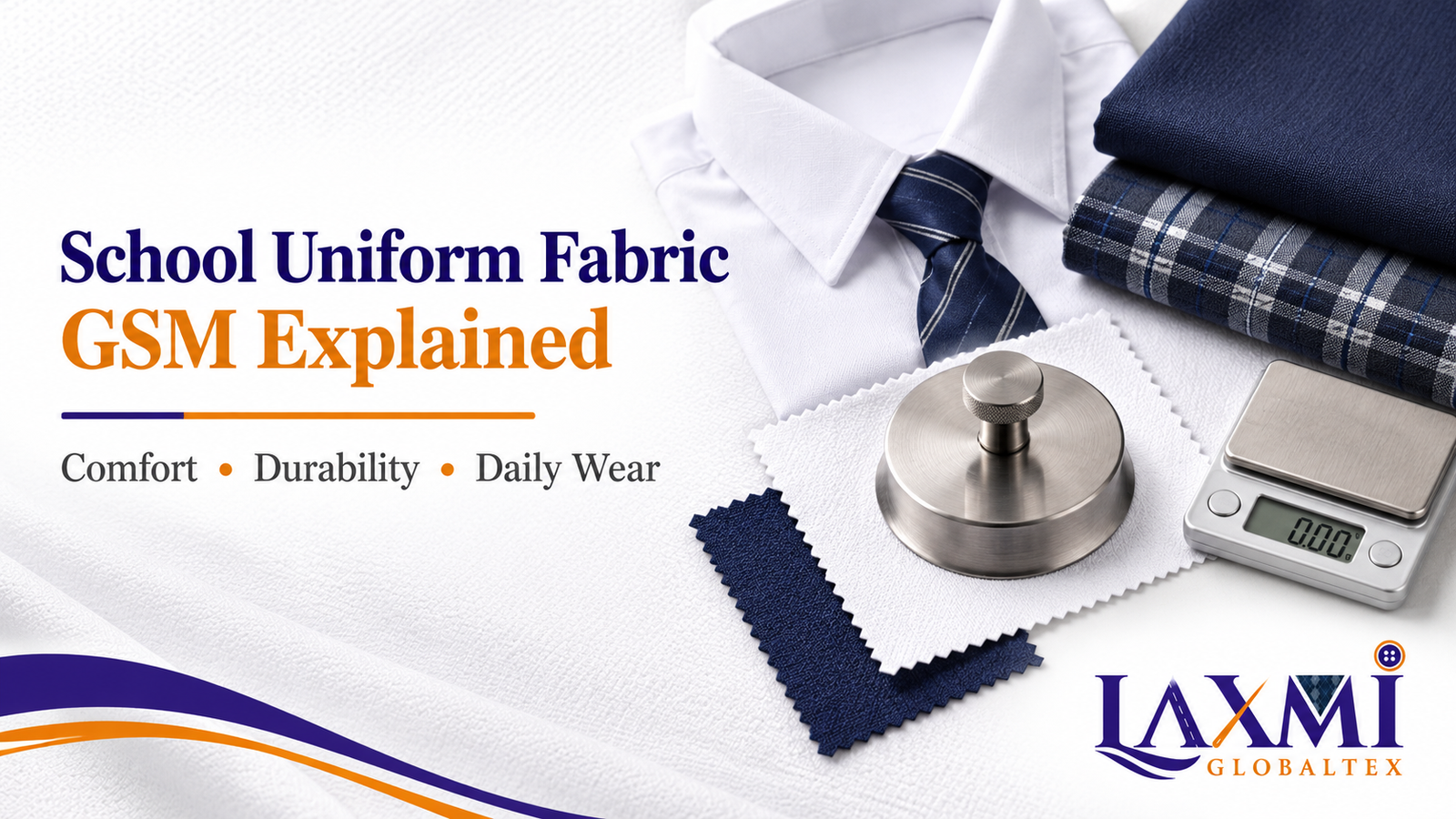
GSM, or grams per square metre, indicates the weight of a fabric. It is useful, but it should never be evaluated in isolation. Two fabrics with similar GSM may perform very differently depending on yarn quality, weave construction, fibre blend, and finishing process.
A well-chosen school-uniform fabric should feel balanced: substantial enough to resist early wear and excessive transparency, yet comfortable enough for a full school day. Very lightweight fabric may reduce initial cost but can become see-through, lose shape, or wear out sooner. Excessively heavy fabric can feel uncomfortable, retain heat, and restrict movement.
- For shirts, assess opacity, breathability, smoothness, and resistance to daily creasing.
- For bottoms, assess fabric density, tear resistance, abrasion resistance, and ability to retain creases or pleats.
- For checks, stripes, and woven designs, ensure the pattern remains aligned and stable after washing.
- For knitted garments, inspect recovery, pilling resistance, and whether the fabric loses shape after repeated use.
Plain weave fabrics are often selected for crisp school shirts, while twill constructions can provide greater strength and a more structured appearance for trousers, skirts, and suiting. The right choice depends on the garment design and the desired finish.
Prioritise Colour Fastness and Shade Consistency
A uniform represents the school’s identity. Faded navy trousers, uneven maroon skirts, or shirts with inconsistent checks can quickly make a uniform program look poorly managed. Colour fastness should therefore be treated as a core procurement requirement, especially for dark colours, bright shades, checks, stripes, piping, and contrast panels.
Ask the supplier to evaluate colour performance against washing, rubbing, perspiration, and sunlight exposure where relevant. It is equally important to assess shade consistency across production batches. A uniform retailer or school should be able to reorder the same fabric without significant variation in colour, pattern scale, or texture.
For bulk uniforms, retain an approved fabric cutting or shade card as a reference. This becomes particularly valuable when additional admissions, replacement orders, or retailer replenishment is required later in the session.
Test Shrinkage, Pilling, and Shape Retention
A fabric can look excellent when new and still fail after a few washes. Shrinkage, pilling, twisting, and loss of shape are among the most common reasons for parent complaints and premature garment replacement.
- Shrinkage: The fabric should remain dimensionally stable after normal washing and ironing.
- Pilling: Small fibre balls on the surface can make uniforms look old quickly, particularly on trousers, sweaters, knitted garments, and high-friction areas.
- Shape retention: Collars, cuffs, waistbands, pleats, knees, and elbows should maintain their structure through regular use.
- Seam performance: The selected fabric must work well with the right thread, stitch density, reinforcement, and garment construction.
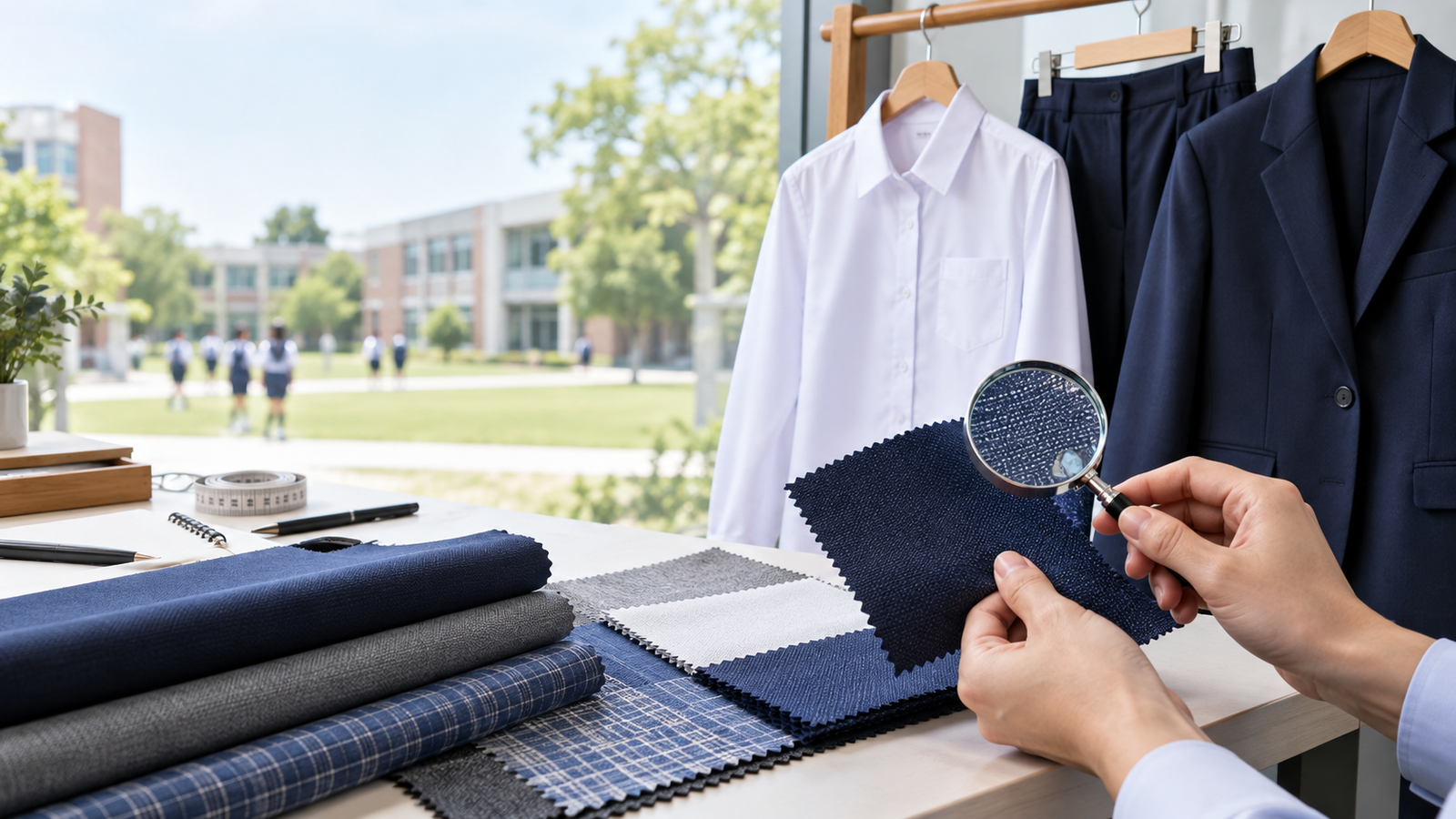
A practical approach is to wash and wear a stitched sample before approving a large order. The sample should be checked for appearance, shrinkage, colour change, comfort, seam strength, and ironing performance. This simple step can prevent costly issues after bulk manufacturing begins.
Consider Climate, Comfort, and Student Movement
Durable fabric should not mean uncomfortable fabric. Students wear uniforms for long hours, often in classrooms, transport, playgrounds, assemblies, and outdoor activities. In warm and humid conditions, breathability and moisture comfort become especially important. In colder regions, fabric weight and layering requirements need more attention.
Comfort also affects how a uniform looks in daily use. A fabric that is too stiff may restrict movement and crease awkwardly. A fabric that is too soft or loose may lose its professional silhouette. The goal is a balanced textile quality that supports movement while maintaining a smart institutional appearance.
Match Fabric With Garment Manufacturing Quality
Even the right fabric can underperform if garment manufacturing is weak. Fabric selection must be aligned with pattern making, size grading, stitching quality, trims, interlining, washing instructions, and final inspection. For example, a durable trouser fabric requires reinforcement at stress points, accurate size grading, suitable pocket construction, and compatible thread quality.
Schools and retailers should evaluate the supplier’s ability to manufacture specification-based uniforms, not just source fabric. The strongest uniform programs are built around approved samples, documented size charts, fabric specifications, trim standards, inspection checkpoints, and controlled bulk production.
Laxmi GlobalTex approaches institutional apparel through this specification-led process, with attention to fabric consistency, fit, garment construction, and dependable execution for schools and organizations managing uniforms at scale.
Look Beyond the Lowest Fabric Rate
The cheapest fabric is not always the most economical choice. A low initial price can lead to frequent replacements, parent dissatisfaction, uneven appearance, and higher administrative effort. A more durable school-uniform fabric may offer better long-term value because it maintains colour, fit, and presentation through the expected wear cycle.
When comparing suppliers, consider the total value of the uniform program rather than only the fabric rate. This includes garment life, complaint rates, repeat availability, production reliability, delivery timelines, and consistency across sizes and batches.
- Does the fabric remain presentable after repeated washing?
- Can the supplier maintain the approved shade and pattern in future orders?
- Are the garment sizes consistent across the full size range?
- Can replacement pieces be supplied without visible variation?
- Is the manufacturer capable of delivering bulk uniforms within the required academic timeline?
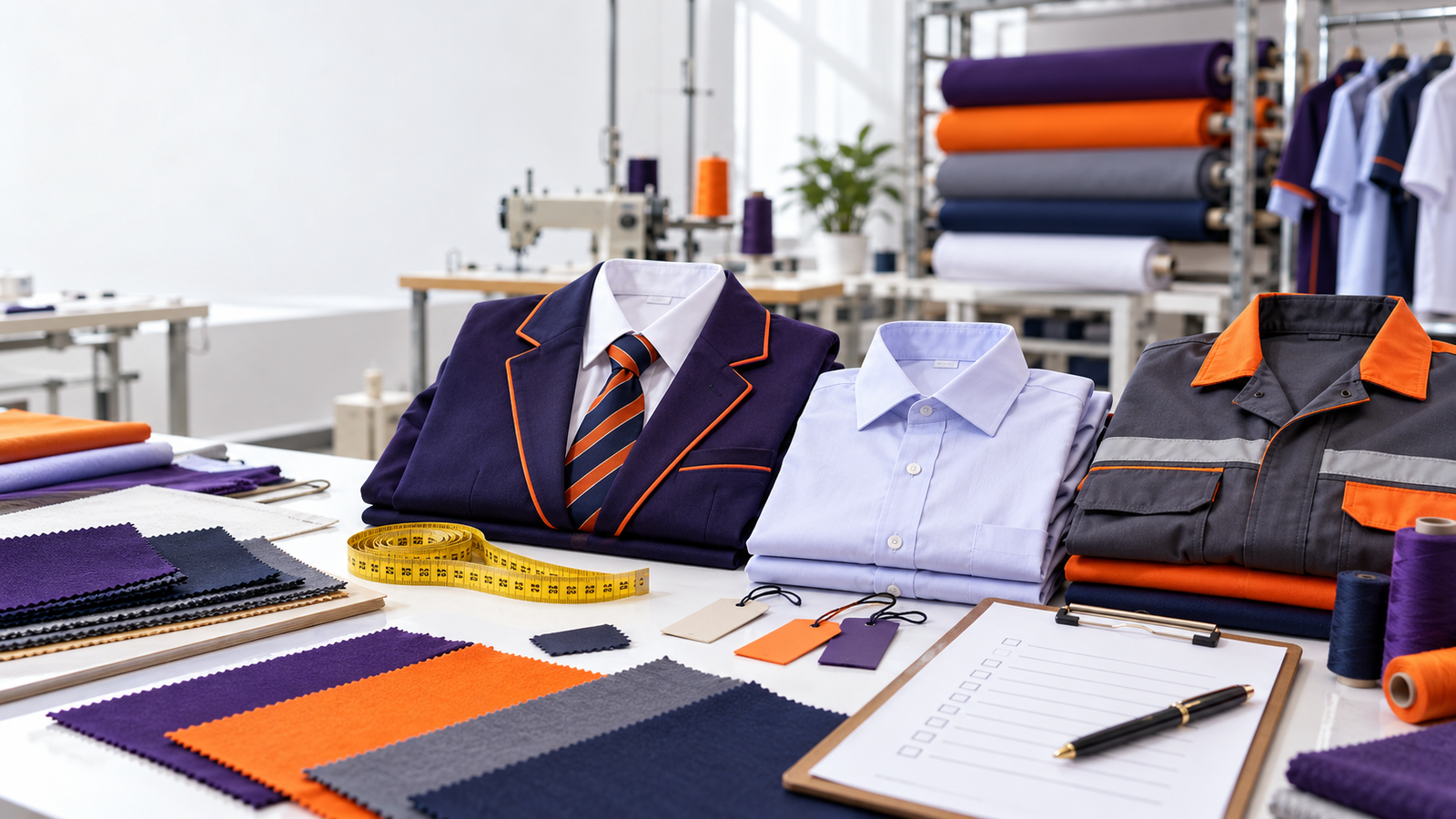
Use a Clear Fabric Approval Checklist
Before finalising a school-uniform fabric, procurement teams should document the required standard in a simple approval sheet. This reduces ambiguity between the school, retailer, fabric supplier, and garment manufacturer.
- Fibre composition and blend percentage
- Fabric type, weave, construction, and GSM
- Colour, pattern, check size, stripe width, and shade reference
- Width, finish, texture, and expected hand-feel
- Colour fastness, shrinkage, pilling, and durability expectations
- Garment-wise fabric usage and approved sample reference
- Size chart, fit standard, trims, labels, and stitching requirements
- Bulk delivery schedule and reorder availability
This level of documentation is especially important for schools with multiple uniform pieces, several classes, different seasonal garments, or a network of authorised retailers.
Make Fabric Selection a Long-Term Uniform Strategy
The best school-uniform fabric is one that performs reliably beyond the first fitting or first wash. It should support comfort, durability, professional appearance, and consistent supply throughout the academic year. By evaluating fibre composition, fabric construction, colour fastness, shrinkage, climate suitability, and manufacturing capability together, schools and retailers can make more confident procurement decisions.
A structured approach to textile quality helps create uniforms that students can wear comfortably, parents can trust, retailers can replenish confidently, and institutions can represent with pride.
rofessional standards.